Registration
Lounge
Registration of your presence at the congress is done at the information desk on the first floor.
DICIM brings together insurance physicians and medical advisors to share knowledge, build professional connections, and remain at the forefront of a field that is continuously evolving.
By engaging with one another and exchanging insights, we enhance the quality of the assessments we make and the advice we provide.















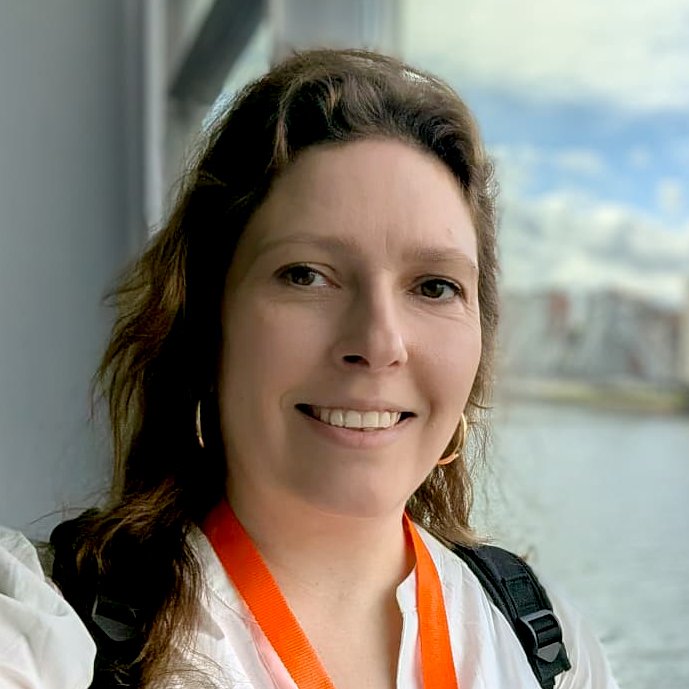


We Are Our Bodies
Our bodies are more important than ever; collectively, we have never exercised so much, and we pay close attention to our diet. At the same time, it seems that our bodies are becoming less and less necessary: due to robotisation and AI, we are becoming redundant in the labour process. What is our body, then, other than a programmable machine? In his presentation, philosopher Aldo Houterman takes you on a journey, using examples from science, art and sport, to explore the various meanings of the human body. He also discusses how certain body images still influence the way humans are portrayed.

Long-Term Health Conditions Don’t Clock Off – Making Workplace Self-Management Work
Long-term health conditions are self-managed at work, not simply around it. Drawing on mixed-method PhD research, the session explores how self-management, job demands, work relationships and timely support combine to shape sustainable work ability. Delegates will be introduced to a practical model aimed at removing self-management barriers, to help people remain well, work able and productive at work.
A review of evidence on what predicts the risk of work disability and how to support sustainable work participation
This presentation reviews evidence on risk factors for sickness absence, disability pension, and delayed return to work at different levels – from individual to work-related. It also summarises the effectiveness of workplace interventions and considers how modifiable risks can be identified and sustainable work participation supported in healthcare

Work participation is often treated as an outcome of successful treatment. This keynote challenges that assumption.
Drawing on trials of work-focused CBT and MCT, Individual Placement and Support, and chronic pain interventions, I will explore how integrating work directly into treatment can improve both clinical outcomes and sustainable work participation.
Brain–Gut Treatments in Irritable Bowel Syndrome and Inflammatory Bowel Disease: The Case for Routine Clinical Adoption
Convergent evidence supports a biopsychosocial model in which cognitive, affective and behavioural factors influence stress related neuroimmune changes and central sensitisation, interacting to perpetuate symptoms across irritable bowel syndrome (IBS) and quiescent Inflammatory Bowel Disease (IBD).
In this keynote I will use my work on IBS to trace the pathway from theory and identified psychosocial mechanisms through intervention development, feasibility testing, and clinical and cost effectiveness studies, to the implementation work required to embed evidence based behavioural interventions into routine medical care. I will argue that this requires collaboration with people with IBS and multiple stakeholders, including industry partners and policymakers. I will also contend that the dichotomy between “functional” and “medical” symptoms is unhelpful and may impede progress toward truly integrative care. I will present evidence that brain–gut models and related cognitive behavioural treatments are relevant to people with IBD as well as IBS and show how a similar pathway for symptom management in IBD could be a cost effective approach to managing the condition. Finally, I will demonstrate that treating depression and psychological distress in IBD can positively affect inflammatory markers and reduce healthcare costs.

Borderline personality disorder - new insights and remaining challenges
I will provide an overview over the current state of the art on borderline personality disorder including diagnostic procedures, etiology and treatment but also talk about ongoing challenges and typical interpersonal dynamics when interacting and working with individuals with BPD.

From Evidence to Practice: How to Make Work Part of Treatment
How can clinicians translate work-focused treatment into everyday practice? In this interactive session, we will use clinical cases to explore how to address work from the first consultation, identify barriers to participation, challenge avoidance, and integrate psychological treatment with practical return-to-work strategies.
Somatic Symptoms: Perception, Coping, and Functional Assessment
Most patients request help from the medical system because of somatic symptoms. However, the classification as a functionally relevant symptom depends on the perception and attribution of the symptoms by the patient. The interaction of somatic symptoms and psychological process will be highlighted, and recommendations will be given how to handle this situation and how to offer explanations.
Spotting the Risk before the Employee Drops Out
Using employee perspectives from PhD self-management support research, we will explore and identify early signs that someone with a long-term condition may be at risk of leaving work, and develop practical interventions before absence, disengagement or job loss sets in.
Respecting Beliefs, Expanding Options: Helping Patients Consider Psychological Approaches to Persistent Symptoms
When patients present with persistent physical symptoms despite negative medical tests, they are often told there is no obvious disease process or that their symptoms are medically unexplained. Rather than feeling reassured, many patients become more anxious, worry that something has been missed, feel medically gaslit, and/or believe the clinician has dismissed their experience as "all in their head".
This workshop focuses on the importance of a positive diagnosis—explaining to patients what they do have rather than only what they do not. Effective communication begins by exploring the patient’s experience and beliefs about their symptoms before offering an explanation. I will demonstrate how a brief, empathic assessment of symptom meaning, threat appraisal, and coping behaviours creates the foundation for a credible, collaborative biopsychosocial explanation.
Using our work on irritable bowel syndrome as a case example, I will show how to present a biopsychosocial formulation that validates the patient’s experience, links cognitive affective and behavioural drivers to symptom perpetuation, and introduces brain–gut treatments as plausible, evidence based options.

From Evidence to Practice: How to Make Work Part of Treatment
How can clinicians translate work-focused treatment into everyday practice? In this interactive session, we will use clinical cases to explore how to address work from the first consultation, identify barriers to participation, challenge avoidance, and integrate psychological treatment with practical return-to-work strategies.
Somatic Symptoms: Perception, Coping, and Functional Assessment
Most patients request help from the medical system because of somatic symptoms. However, the classification as a functionally relevant symptom depends on the perception and attribution of the symptoms by the patient. The interaction of somatic symptoms and psychological process will be highlighted, and recommendations will be given how to handle this situation and how to offer explanations.
Spotting the Risk before the Employee Drops Out
Using employee perspectives from PhD self-management support research, we will explore and identify early signs that someone with a long-term condition may be at risk of leaving work, and develop practical interventions before absence, disengagement or job loss sets in.
Respecting Beliefs, Expanding Options: Helping Patients Consider Psychological Approaches to Persistent Symptoms
When patients present with persistent physical symptoms despite negative medical tests, they are often told there is no obvious disease process or that their symptoms are medically unexplained. Rather than feeling reassured, many patients become more anxious, worry that something has been missed, feel medically gaslit, and/or believe the clinician has dismissed their experience as "all in their head".
This workshop focuses on the importance of a positive diagnosis—explaining to patients what they do have rather than only what they do not. Effective communication begins by exploring the patient’s experience and beliefs about their symptoms before offering an explanation. I will demonstrate how a brief, empathic assessment of symptom meaning, threat appraisal, and coping behaviours creates the foundation for a credible, collaborative biopsychosocial explanation.
Using our work on irritable bowel syndrome as a case example, I will show how to present a biopsychosocial formulation that validates the patient’s experience, links cognitive affective and behavioural drivers to symptom perpetuation, and introduces brain–gut treatments as plausible, evidence based options.
The power of expectations: About placebo and nocebo effects and their clinical relevance
Patient expectations have been shown to be one of the best predictors of treatment success. Research on placebo and nocebo effects indicates that these effects determine treatment outcomes, both in positive (placebo) and negative (nocebo) directions. Clinical examples are highlighted, and recommendations how to deal with these effects in treatments, rehabilitation, expert opinions, and clinical reserach are presented.


.svg)
Personality disorders: challenging dynamics in the patient, at work and in the consultation room.
People with a personality disorder are more likely to experience emotional and behavioural problems and often find themselves in conflict with others more readily. They experience a great deal of stress, which leads to the more rapid development of not only psychological but also physical symptoms, and creates an increased risk of chronic illnesses, fatigue and chronic pain. Unhealthy behaviour is also more common.
This has implications not only for their personal lives and their ability to work, but also for the extent to which they can benefit from treatment and the process of reintegration. After all, these patients are more likely to have problems with adherence to medication and following lifestyle guidelines. It is also more difficult for them to adequately assess their limits, their care needs and when to seek help. Furthermore, interpersonal problems arise more readily, which not infrequently lead to a breach of trust, complaints procedures and misjudgements, as well as over- or under-treatment.
This lecture will explore the challenges you may encounter with various personality disorders and how you can better understand these through the internal dynamics of the disorder itself. Building on this, it will examine in more detail the pitfalls in assessment and treatment, as well as the factors that influence reintegration and treatability.
FemHealthData: using data to improve women’s health and promote sustainable labour market participation.
By linking data from antenatal care to labour market outcomes, such as income and hours worked, we highlight how health during pregnancy and childbirth affects women’s social and economic participation. In doing so, we not only shed light on health outcomes, but also on the broader impact on work and participation.
In addition, we discuss future plans in which linked routine healthcare data, socio-economic data and other data sources will be combined with data-driven innovations, including AI and predictive models. The aim is to identify health risks at an earlier stage, enable targeted prevention and appropriate care, and thus contribute to a future in which women age more healthily and can continue to participate fully and sustainably in society and the labour market.
In the privacy of the consultation room, patients do not always speak their minds. There is a wide array of jargon to describe this: dissimulation, exaggeration, malingering, Münchhausen syndrome, underperformance, etc. The resulting confusion over terminology complicates diagnosis and regularly stands in the way of treatment. In this talk, Harald Merckelbach brings order to the terminological chaos surrounding symptom validity. He also demonstrates how validity tests can help to draw a clearer distinction between psychopathology, deception and everything in between.
What if someone has a good job and a great salary, but has been unhappy at work for a long time? In this humorous and thought-provoking talk, Anne-Marije Buckens invites you to reflect on job satisfaction, sustainable employability and the courage to make a new choice. Why do people stay where they are? And what does it take to finally open the door of the golden cage? Expect relatable stories, sharp insights and a fresh perspective on people who feel stuck in their work.